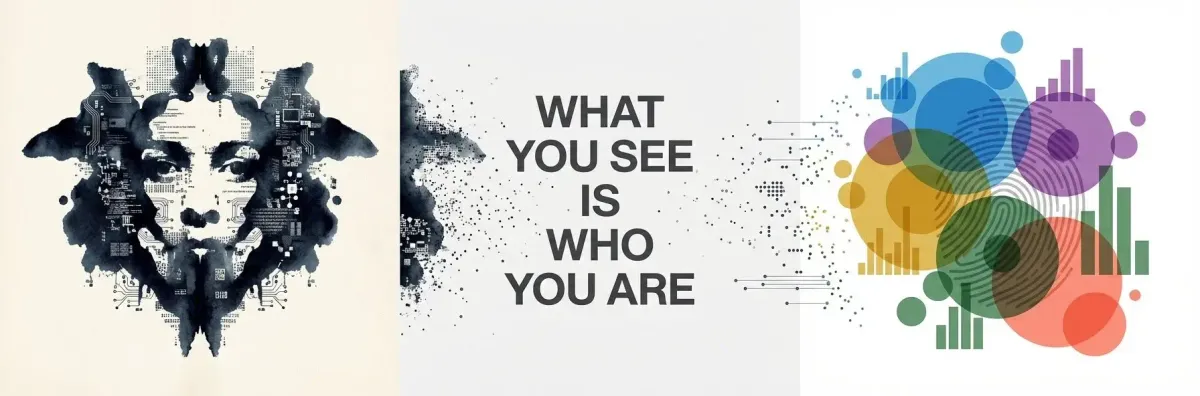
A friend’s WhatsApp question—“Do you think AI is going to leave introverts behind?”—prompted deeper reflection beyond a quick response. I recall 1999, when fresh enthusiasm for technology felt boundless, contrasting with current skepticism as AI capabilities increasingly mirror human abilities.
The Personality Puzzle: Who Loves AI and Who Doesn’t?
Research reveals personality shapes AI perception more than the technology itself. Park and Woo (2022) found that openness to experience correlates positively with viewing AI functionally, while neuroticism produces negative emotional responses but surprisingly positive attitudes toward AI’s social dimensions.
Introverts vs. Extraverts: The AI Relationship Paradox
Counterintuitively, extroverts display “more negative emotional attitudes toward AI and negatively evaluated the functionality of AI.” Introverts embrace AI more readily—what researchers term “algorithm appreciation.” As one study notes, “introverts may have more favourable attitudes towards AI because AI may replace people in routine tasks.”
AI functions as a buffer against overstimulation for those finding constant human interaction draining.
Beyond Introversion: The Full Personality Picture
Different traits choreograph distinct AI relationships:
Agreeableness: Those scoring high focus on positive aspects and trust developers’ intentions, approaching technology with optimism.
Conscientiousness: Organized individuals appreciate functionality but devalue social elements, treating AI as specialized tools.
Openness to Experience: Curious types embrace AI when perceiving competence and efficiency, drawn to potential rather than threatened by change.
Neuroticism: Those prone to anxiety show mixed reactions—negative emotional attitudes paired with positive appraisal of AI’s sociability, discovering unexpected comfort in predictability.
The Trust Factor: Beyond Personality
Schepman and Rodway (2023) discovered conspiracy mentality correlates with negative AI views. Skeptics of institutions typically extend that skepticism toward artificial intelligence. Age influences attitudes similarly, with older individuals tending toward negativity—potentially reflecting generational exposure rather than personality alone.
What This Means for Our AI Future
Heated AI debates often reflect personality clashes alongside technological disagreements. Clients occupy different journey stages: some overwhelmed initially, others cycling through excitement, optimism, and disillusionment phases with each advancement.
This mirrors Joseph Campbell’s Hero’s Journey, though AI presents repeated cycles rather than singular narratives. A “valley of losses” emerges during disillusionment—losses involving control, pride, familiarity, expertise, narrative, and time—resonating differently across personality types.
Organizations implementing AI should tailor approaches by personality profile rather than applying uniform solutions. Research suggests “interventions aimed at reducing technology anxiety should focus on increasing digital social participation.”
Will AI Leave Introverts Behind?
The research indicates the opposite. Introverts appear predisposed toward positive AI relationships, finding efficient partners who don’t deplete social resources.
My 2019 reflection noted widening gaps between technology enthusiasts and skeptics. Understanding personality-driven perspectives illuminates these divergences. Both Aldous Huxley’s and George Orwell’s dystopian visions—one about loving what oppresses us, another about oppressing what we love—may reflect psychological predispositions rather than purely ideological differences.
Strategic navigation requires recognizing psychological inclinations: “Simply waiting to react to technological changes as they occur is a passive strategy, offering little advantage.” Self-understanding becomes paramount in relationships with technology itself, especially when AI interactions leave us oddly drained.
The “So What?”: Practical Applications
For Individuals
-
Self-awareness as superpower: Understanding personality-based predispositions helps anticipate reactions. Neurotic anxiety about new tools may misrepresent actual value; extrovert skepticism might undervalue efficiency-focused solutions. One starting point: mapping your mental model of AI to see which attitude cluster shapes your defaults.
-
Personalize approaches: Introverts benefit from tools reducing administrative social interactions; extroverts focus on solutions enhancing rather than replacing human connection.
-
Expand comfort zones: Deliberate practice with triggering aspects in manageable doses gradually shifts technology relationships, and ancient contemplative practices offer proven methods for building this capacity.
For Leaders Implementing AI
-
Diversify champions: Include different personality types on implementation teams, pairing complementary traits.
-
Tailor training: Create multiple learning pathways—self-paced for introverts, collaborative for extroverts, detailed documentation for conscientious types, reassurance for anxious individuals.
-
Map personality landscapes: Anticipate adoption challenges by informally assessing dominant traits in different departments.
-
Address the valley of losses: Directly confront losses of control, pride, familiarity, expertise, narrative, and time as joint learning experiences.
-
Create psychological safety: Establish judgment-free environments where people express anxieties.
I employ the “3 W’s” framework in consulting:
- Worries: Concerns about workplace AI
- Wishes: Hoped-for AI accomplishments
- Wonders: Curiosities and questions
This approach validates concerns without dominance, taps positive possibilities, and creates neutral curiosity spaces.
The objective isn’t eliminating personality-based reactions but harnessing them productively. Conscientious caution prevents implementation errors; open enthusiasm reveals unexpected applications. Understanding personality dynamics transforms obstacles into stepping stones for effective integration—making technology serve all personality types. These personality-aware strategies complement broader AI adoption frameworks that account for the full human dimension of organizational change.
Thanks to Virginia Cullen for the WhatsApp question that inspired this exploration.